Retail loss prevention is the active reduction of inventory shrink through trained Loss Prevention (LP) officers — uniformed or plainclothes — who deter, observe, document, and lawfully detain suspected shoplifters under California Penal Code §490.5 (merchant detention). 247 Private Security places BSIS-certified LP officers in retail stores, dispensaries, boutiques, shopping centers, and warehouses across Los Angeles. Officers work store-floor deterrent presence or covert observation, coordinate with store management on suspect identification, and produce admissible incident reports for prosecution or insurance claims.
What retail loss prevention covers
- Active shoplifter detection — uniformed deterrent presence plus plainclothes covert observation
- Internal theft investigations — employee theft via POS manipulation, refund fraud, voided-sale schemes, back-door inventory transfers
- Stop-and-detain protocol — BSIS-compliant merchant-detention procedures under §490.5
- CCTV surveillance support — officer monitors live camera feeds, narrates events for evidence preservation
- Refund-fraud detection — pattern recognition on serial returners and organized retail-crime groups
- Civil-demand collections — written documentation supporting your civil-demand letter to recovered shoplifters under §490.5(c)
- Daily shrink reporting — written log of all incidents, suspects identified, items recovered, and patterns observed
Plainclothes vs uniformed LP officers
The right mix depends on your shrink pattern:
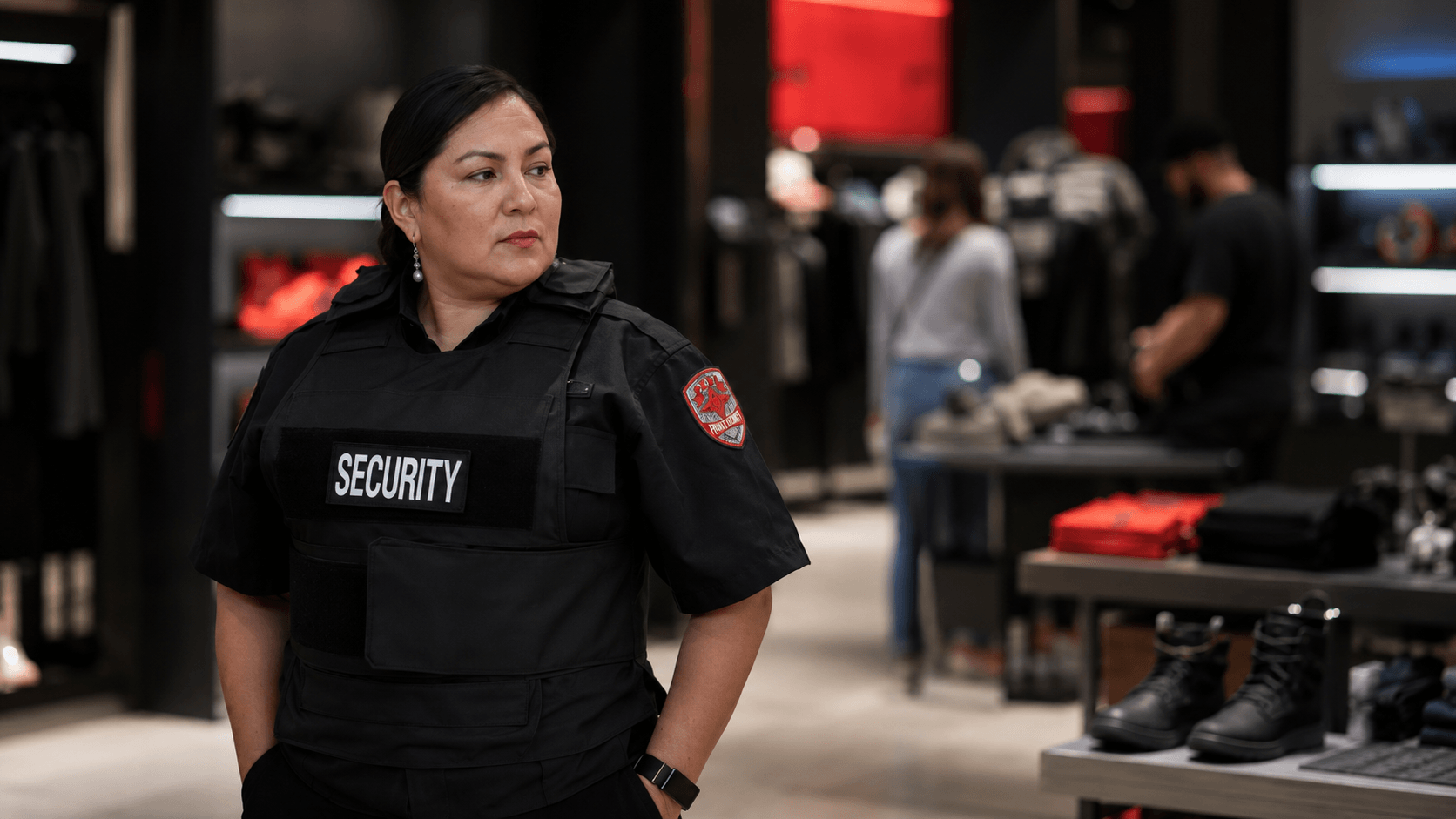
- Uniformed deterrent — most effective for stores with high foot traffic where visible presence prevents casual theft. Boutique, jewelry, and high-value electronics retailers benefit most. Officers wear branded LP uniforms or company-blazer attire.
- Plainclothes covert — most effective for stores experiencing organized retail crime, professional shoplifters, or internal employee theft. Officers blend with customers, observe suspicious behavior, and document for prosecution. Big-box retailers, grocery, drug stores benefit most.
- Mixed coverage — uniformed officer at front entrance plus plainclothes officer on floor — covers both casual and professional theft. Standard for higher-shrink locations.
What our LP officers do (and what they cannot do)
BSIS guard cards permit specific authorities for LP officers. Our protocol:
- Observe, identify, document — primary role is evidence gathering with minimal customer impact
- Stop and detain — lawful detention under §490.5 when criminal intent is documented (concealment + intent + leaving the store + no payment)
- Use of force minimized — physical force only to prevent escape after lawful detention, not to recover merchandise
- 911 escalation — armed or violent suspects, organized crime groups, escalating situations are always escalated to law enforcement
- Court-admissible reports — written incident reports include officer name, BSIS ID, suspect description, timeline, recovered merchandise list, and witness names
What LP officers do NOT do: aggressive in-store interrogation, racial profiling, harassment, or detention of customers without documented criminal intent. All our officers complete BSIS-approved de-escalation training plus internal LP-protocol training.
Industries we serve
- Specialty retail (jewelry, electronics, designer apparel, watches)
- Big-box retail and warehouse clubs
- Grocery and drug stores
- Cannabis dispensaries (high-cash + DOJ-regulated environment)
- Shopping centers and outlet malls
- Distribution centers and warehouses
- Pop-up shops and seasonal retail
Pricing
- Plainclothes LP officer, single 8-hour shift: $32–42/hour
- Uniformed LP officer, single shift: $30–38/hour
- Mixed coverage (one plainclothes + one uniformed): $60–75/hour total
- 24/7 retail coverage: roughly $22,000–$30,000 per month per location
- Short-term holiday or seasonal surge: standard rate, 4-hour minimum, 48-hour booking lead time
Set up retail loss prevention in Los Angeles
247 Private Security is licensed under PPO #120440 through the California Bureau of Security and Investigative Services. Our LP officers carry BSIS guard cards with current continuing-education credits. For California merchant-detention authority and firearm-licensing specifics, see California DOJ resources. Related services: LP officer specifics, unarmed retail guards, concierge security. We cover all Greater Los Angeles, Orange County, and Ventura County. To request a written quote, submit your store details or call 818-805-4342.