
CAPABILITY

FOOT PATROL SERVICES

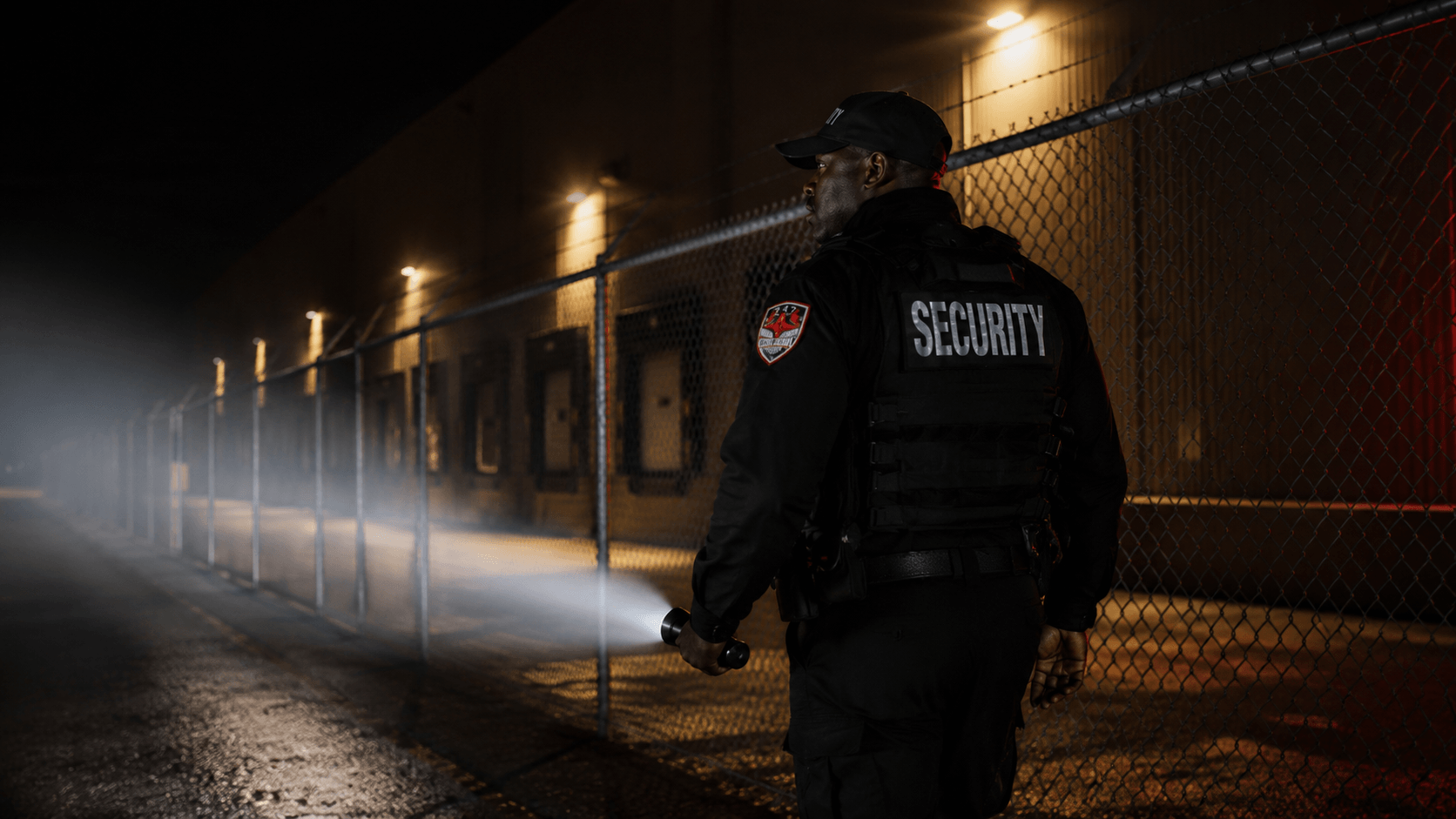
Foot patrol security deploys walking, uniformed officers who actively traverse a defined area — a property perimeter, retail district, parking structure, residential block, or large event space — rather than standing at a fixed post or driving a vehicle. Foot patrol works where a vehicle can’t go and where a standing post wouldn’t cover enough ground: covered parking levels, multi-building campuses, gated-community interior streets, large mixed-use developments, pedestrian-only zones, and farmers’ markets / outdoor events. 247 Private Security fields foot-patrol officers across Los Angeles from our Chatsworth dispatch, with documented patrol routes and 24/7 supervisor oversight.

What foot patrol covers that other methods don’t

Foot patrol fills the operational gap between a fixed standing guard (one location, no movement) and vehicle patrol (large area, but car-only). It works for:

  • Covered parking structures — vehicle patrol can’t navigate low-clearance decks; foot officers walk every level
  • Multi-building campuses — corporate, hospital, university — where ground patrol between buildings reads as a deterrent presence
  • Gated-community interiors — walking the streets after a vehicle-patrol cycle catches incidents inside homes that a driving officer wouldn’t see
  • Retail districts + mixed-use developments — Westfield, The Grove, downtown LA promenades — where pedestrians expect to see uniformed presence
  • Large outdoor events — concerts, fairs, festivals — where crowd density makes vehicle access impossible
  • Construction site interior walks — between trailers, lay-down yards, and equipment stages where a vehicle can’t fit
  • Farmers’ markets + open-air retail — high-volume foot-traffic environments where visible patrol calms vendors and customers

What’s included in a foot patrol deployment

  • Uniformed officers walking a defined route at scheduled or random intervals
  • Documented patrol logs with checkpoint completion at fixed points (entrances, stairwells, perimeter corners)
  • GPS-tracked patrol path when route documentation is required (insurance, HOA board, property-manager audits)
  • Two-way radio in continuous contact with 24/7 dispatch
  • Real-time incident reporting to your designated contact
  • Coordination with on-site standing posts when you have both (lobby + patrol model)
  • Backup officer dispatch within 30 minutes of any incident requiring additional coverage
  • $2M liability insurance covering each officer

Foot patrol vs. vehicle patrol — when to choose which

Foot patrol is the right choice when your property has tight access, multi-level structure, high pedestrian density, or spaces a vehicle simply can’t enter. Vehicle patrol is the right choice when your property is geographically spread out (large lot, multiple buildings far apart), street-accessible, or when you need visible deterrent across a large area in a short patrol window. Many clients combine both: foot patrol inside the property with vehicle patrol on the surrounding streets and adjacent parking lots.

Get foot patrol security in Los Angeles

247 Private Security is licensed under PPO #120440 through the California Bureau of Security and Investigative Services. Foot patrol coverage available across Los Angeles, Orange, and Ventura counties. For fixed-location posts instead of walking coverage, see standing guard services. To scope your property: call 818-805-4342 or request a written quote.

Every 30 min Typical patrol cycle
GPS-tracked Patrol path documentation
24/7 Dispatch supervision
Within 30 min Backup officer for incidents
PROCESS

How it works

  1. 01

    Site Walkthrough + Route Design

    A duty supervisor walks your property with you to identify patrol route, checkpoint stops, problem zones, and any specific protocols (after-hours rules, pet protocols, resident-access rules).

  2. 02

    Patrol Schedule + Post Orders

    Written patrol schedule with checkpoint frequency, time windows, and rules of engagement. Officers receive printed post orders before first shift.

  3. 03

    Officer Briefing + Trial Walk

    Assigned officer(s) walk the route with our supervisor before going on shift solo — learns building layout, problem zones, key contacts, and any rules unique to your property.

  4. 04

    Active Foot Patrol

    Officer walks the documented route at scheduled or random intervals, logs each checkpoint via GPS-tracked app, maintains continuous radio contact with dispatch.

  5. 05

    Patrol Logs + Monthly Pattern Review

    Daily patrol logs with GPS path delivered to your contact. Monthly review with operations supervisor to refine route based on patterns observed (high-incident zones, time-of-day gaps).

COVERAGE

Cities we serve

  • Beverly Hills
  • Bel Air
  • Hollywood Hills
  • Calabasas
  • Encino
  • Sherman Oaks
  • Studio City
  • West Hollywood
  • Pacific Palisades
  • Malibu
  • Brentwood
  • Santa Monica
  • Westwood
  • Pasadena
FAQ

Common questions

How often does a foot patrol officer check each part of the property?

Standard cycle is one complete loop every 30 minutes, but cycle length depends on property size and your post-order spec. Large multi-building campuses might run a 45-minute cycle; tight residential properties can run every 15 minutes. The route + cycle is set during the property walkthrough and documented in the post orders.

How do you prove the officer actually walked the route?

Every patrol officer carries a GPS-tracked checkpoint app. At each documented checkpoint (entrance, stairwell, perimeter corner), the officer logs presence — timestamp, location, any observed conditions. We deliver the daily log to your designated contact and the GPS path is auditable for insurance, HOA, or property-manager review.

Can foot patrol officers be armed?

Yes, when the threat picture warrants it — typically for properties with credible threats, high-value contents, or located in areas where the officer may encounter people in crisis. Most foot patrol deployments are unarmed; armed foot patrol is available on request with appropriate post-order language and a higher hourly rate.

What happens if a foot patrol officer encounters an intruder?

Officer immediately radios dispatch and your designated contact. Officer maintains visual contact from a safe distance, does not engage physically unless reasonable force is required for self-defense or defense of others. LAPD is dispatched if the situation warrants. Officer documents everything — physical description, direction of travel, time stamps, any property damage — for the incident report.

Can I combine foot patrol with a standing guard at the main gate?

Yes — this is the most common deployment model for large residential properties and gated communities. A standing guard controls main-entry access; a foot patrol officer walks the interior streets, common areas, and back-perimeter where the gate guard can't see. Combined, you get gate-screening (standing) plus active interior coverage (patrol) for the same shift window.

How much does foot patrol cost?

Unarmed foot patrol typically runs $30–40 per hour per officer; armed runs $48–68. Pricing depends on property size, cycle frequency, shift length, and whether you're on a monthly retainer. Most foot patrol clients combine multiple properties or shifts onto a retainer for better hourly rates. Request a property-specific quote.

Page published May 7, 2026 · Last updated May 19, 2026 · Licensed PPO #120440